



The Best SI Joint Pain Exercises at Home: Mobilise and Stabilise the Sacroiliac Joint
Effective at-home exercises that may help relieve sacroiliac (SI) joint pain — mobilising and stabilising the joint — demonstrated by a chiropractor with over 24 years of clinical experience. No equipment needed for the core routine.
The sacroiliac joint sits in the buttock area, between the sacrum and the iliac bone of the pelvis, and it’s a major contributor to back pain — estimated to be responsible for around 15–25% of cases. It typically causes a dull ache at the top of the buttocks, which can radiate into the groin and thighs, and is often eased at night by sleeping with a pillow between the knees.
In this video, our chiropractor Jasper Hulscher works through a full routine: a mobilisation exercise to free up the joint, then a series of stabilising exercises — modified squats, side stepping, and the glute bridge — that activate the glutes and piriformis to support the joint. He also demonstrates two piriformis stretch variations and, for those who need it, how to fit and use a pelvic (trochanteric) belt — particularly useful during and after pregnancy, when the joint is often less stable.
Related Reading:
Is chiropractic safe? What patients in Bury St Edmunds should know
Questions
What are the best exercises for SI joint pain?
What is the sacroiliac (SI) joint and where is it?
What are the symptoms of SI joint pain?
How do I mobilise and stabilise the SI joint?
How do I stretch the piriformis muscle?
Why is SI joint pain common in pregnancy, and does a pelvic belt help?
Key Takeaways (timestamped)
[00:00] Signs of SI joint pain — pain at the top of the buttocks, radiating into the groin or thighs, often relieved at night by a pillow between the knees.
[00:38] What the SI joint is — the joint between the sacrum and the iliac bone of the pelvis; when irritated it causes buttock, groin, and thigh pain. The routine both mobilises and stabilises it.
[01:14] Exercise 1 — SI joint mobilisation — lying on the back, pull one knee to the chest while pushing the other knee down into the surface to create torsion through the joint. Hold 10 seconds each side, 3 times, once daily.
[01:54] Exercise 2 — Modified squats — squat with feet turned outwards (external rotation) to activate the gluteus maximus and piriformis, squeezing the glutes at the top. 10 reps, 3 sets daily.
[02:46] Exercise 3 — Advanced squats — the same with a resistance band over the knees.
[03:13] Side stepping — band around the knees, low squat, toes out, walking side to side to build glute, piriformis and quad strength.
[03:54] Glute bridge — shoulders supported, feet turned out, lift and squeeze the glutes at the top. 10 reps, 3 sets daily.
[04:36] Piriformis stretch (2 variants) — the key muscle to stretch for SI joint problems; two versions shown, since one may be felt more than the other.
[06:12] Pelvic belt — a trochanteric/pelvic belt fitted two fingers above the bony point of the hip helps stabilise the joint; especially useful in and after pregnancy, when ligaments are laxer.
Transcript
Introduction
Do you experience pain at the top of your buttocks, or perhaps in your groin or thighs? And at night, do you have to sleep with a pillow between your knees to be comfortable? If the answer is yes, you’re probably struggling with SI joint pain — sacroiliac joint pain. In this video I’ll demonstrate some effective exercises to get rid of that pain.
Basic Anatomy of the Sacroiliac Joints
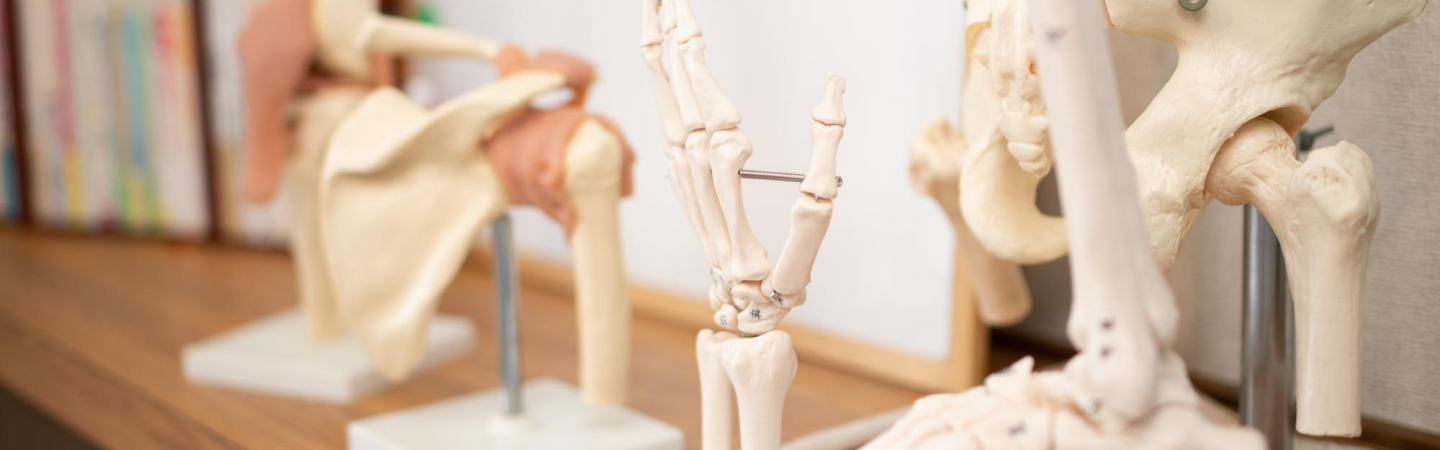
Using an anatomical model: the lower back sits here, the buttocks here. The large bone is the iliac bone of your pelvis, and the triangular bone is the sacrum. The SI joint is the joint between the sacrum and the iliac. It’s this joint that can give you pain at the top of your buttocks and radiating pain into the groin and thigh. These exercises both mobilise the joint and help stabilise it.
Exercise 1: SI Joint Mobilisation
The devil is in the detail. Lie on your back and pull one leg towards your chest as far as you can. Importantly, with the other leg, don’t let it come up — push your knee down into the bench. That creates maximum torsion in the SI joint. Hold about 10 seconds, then switch sides. Repeat about three times, once a day.
Exercise 2: Modified Squats
This helps stabilise the SI joint. It’s a normal squat but with the feet turned outwards — external rotation — which activates the gluteus maximus and the piriformis, stabilising the joint. Feet out, come all the way down and up, and at the top squeeze your buttocks, pushing your belly slightly forward to activate the glutes. Do about 10 repetitions, three sets every day.
Exercise 3: Advanced Modified Squats
To make it harder, add a resistance band. Step into the band, feet out, band over the knees, and squat down and up, squeezing the glutes at the top. Again, 10 repetitions, three sets daily.
Advanced Side Stepping
Grade it up further: band around the knees, get into a squat position with toes and feet facing outwards, and walk side to side. This really burns the thighs and glutes. Sit low, don’t bend your back too much, stay upright, feet out, and walk side to side. It burns the glutes, piriformis, and quads, and helps stabilise the SI joint.
Glute Bridge
You can’t miss this classic. Support your shoulders on a sofa or bench, legs in line with the body, knees at 90 degrees. Drop your bottom towards the floor and raise it back up, squeezing the buttocks hard at the top, feet turned outwards. Hold a few seconds. Repeat 10 times, three sets, daily.
Piriformis Stretch (Variant 1)
One muscle you must stretch for SI joint problems is the piriformis. To stretch the right piriformis, lie on your back with the left leg bent, place your right ankle on your left knee, and pull the left knee towards your chest — you should feel it deep in the buttock. Hold about 10 seconds, repeat three to five times, daily. Then do the other side. Sometimes people don’t feel it this way.
Piriformis Stretch (Variant 2)
The other way: to stretch the right piriformis, straighten the left leg, place the right foot on the outside of the left knee, pull the right knee towards the left chest, and rotate your body towards the affected side, staying upright. You should feel it deep in the buttock. Hold about 10 seconds, three to five times, then do the other side.
Pelvic Girdle Band
SI joint instability is very common in women who are pregnant or have just given birth, because in the last trimester the ligaments loosen to prepare for birth. For those patients, alongside the exercises, I advise a trochanteric or pelvic belt. Find the bony point on the side of the hip; there’s a small gap on top of it. Place two fingers above the gap — that’s where the belt sits, around the pelvis. Squeeze your glutes as you fasten it to stabilise the joint further. You can wear the belt during the exercises too, if they’re painful. I hope you found value in this video. Take care of yourself, take care of someone else if you can, and bye for now.
Summary
The sacroiliac (SI) joint, where the sacrum meets the pelvis in the buttock area, is a major and often overlooked contributor to back pain — thought to account for around 15–25% of cases. It typically produces a dull ache at the top of the buttocks that can radiate into the groin and thighs, often eased at night by a pillow between the knees. This video demonstrates a full at-home routine that both mobilises the joint (a torsion-based stretch lying on the back) and stabilises it through exercises that activate the glutes and piriformis: modified squats with the feet turned out, banded side stepping, and the glute bridge. Two piriformis stretch variations are shown, as the muscle is closely involved. For those with joint instability — common during and after pregnancy, when the ligaments loosen — a pelvic belt can add support and can be worn during the exercises if they’re painful. If SI joint pain is severe or persistent, a chiropractor can assess and treat the underlying cause.
Frequently Asked Questions
What is the sacroiliac (SI) joint?
It’s the joint between the sacrum — the triangular bone at the base of the spine — and the iliac bone of the pelvis. There’s one on each side, in the buttock area. When it becomes irritated it can cause pain at the top of the buttocks that radiates into the groin and thigh.
What are the symptoms of SI joint pain?
Typically a dull, achy lower-back pain, usually more on one side, just below the lower back around the top of the buttock. It can radiate into the buttocks, hips, and groin, and sometimes causes numbness or tingling into the buttock or back of the thigh. It’s often aggravated by changing position — such as sitting to standing — and can be worse at night, with some relief from placing a pillow between the knees.
How do you fix SI joint pain — mobilise or stabilise?
Both. The routine starts with a mobilisation exercise to free up the joint, then focuses on stabilising it by strengthening the muscles that support it — chiefly the glutes and piriformis — through modified squats, side stepping, and the glute bridge. Turning the feet outwards during these exercises is what recruits those stabilising muscles.
How do I stretch the piriformis?
Two ways are shown. In the first, lying on your back, you cross one ankle over the opposite bent knee and pull that knee towards your chest. In the second, you place the foot on the outside of the opposite knee and rotate your body towards the affected side. Some people feel one version more than the other, so it’s worth trying both and using whichever gives you the stretch deep in the buttock.
Why is SI joint pain common in pregnancy?
During the last trimester, the body releases hormones that loosen the ligaments to prepare for birth, which can leave the SI joint less stable. This often continues after giving birth. Alongside the exercises, a pelvic (trochanteric) belt — fitted two fingers above the bony point on the side of the hip — can help stabilise the joint, and can be worn during the exercises if they’re uncomfortable.
Does SI joint pain really cause back pain?
Yes — it’s estimated to be responsible for around 15–25% of back pain, which makes it a significant and frequently underestimated source. Because the pain is felt around the buttock and can radiate, it’s sometimes mistaken for other causes.



GET IN TOUCH
Let’s Talk
If you would like to find out how we can help you or any other questions, please message, call or use our form to get in touch.


Monday - Friday 7:30 - 19:30

Fornham Chiropractic Clinic
Unit 10
Fornham Business Court
The Drift
Fornham St Martin
Bury St Edmunds
IP31 1SL
