


Tennis Elbow: Symptoms, the Maudsley’s Test, and Eccentric Exercises That Work
The best exercises and therapies for tennis elbow, demonstrated by a chiropractor with over 24 years of clinical experience — including two eccentric strengthening exercises that are especially effective for tendon injuries and rarely shown elsewhere.
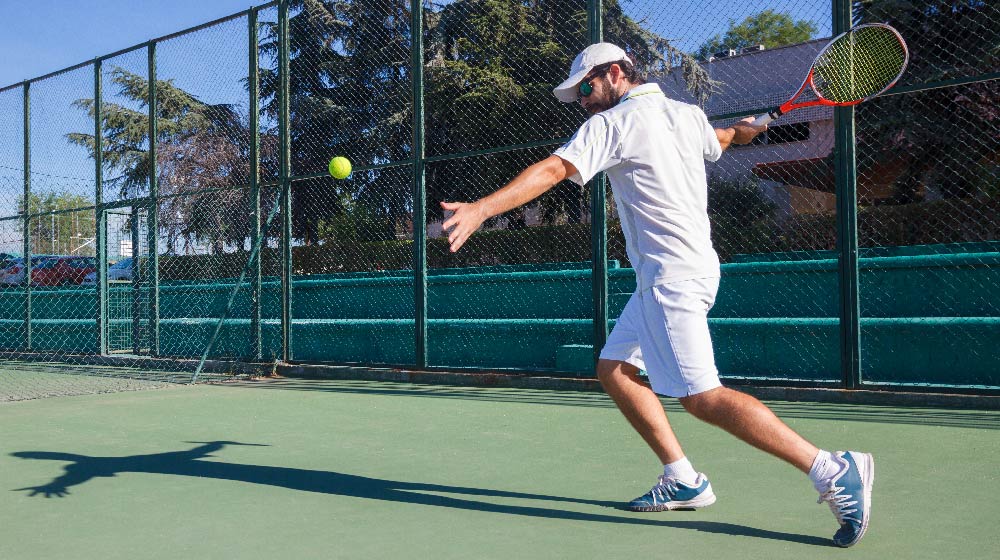
Tennis elbow is pain around the outside of the elbow, and it’s very common — thought to affect around one in three people at any given time. It flares up when lifting, gripping small objects like a pen, opening a jar or door, or even pouring a cup of tea. Despite the name, only about 5% of cases come from racket sports; the vast majority are repetitive overuse injuries — bricklaying, plumbing, painting, gardening, or long hours on a computer mouse.
Our chiropractor Jasper Hulscher covers the symptoms and causes, a self-test (Maudsley’s test), a forearm stretch, and the two key eccentric strengthening exercises for the tendon. He then runs through self-care that genuinely helps — ice therapy, cross-friction, a tennis-elbow strap (and how to position it), and switching to an ergonomic mouse — plus shockwave therapy and supportive supplements.
The core message: tennis elbow is a tendon injury, so it needs rest from the aggravating activity plus the right loading to heal.
Related Reading
Is chiropractic safe? What patients in Bury St Edmunds should know
Questions
What are the best exercises for tennis elbow?
What are the symptoms and causes of tennis elbow?
How do I test for tennis elbow (Maudsley's test)?
What are eccentric exercises and why do they help tendon injuries?
How do I position a tennis-elbow strap correctly?
Can an ergonomic mouse help tennis elbow?
Key Takeaways (timestamped)
[00:00] What it is — pain around the outside of the elbow, affecting around one in three people at any given time.
[00:37] Symptoms — pain when lifting, bending the arm, gripping small objects (a pen), opening a jar or door, or pouring a drink.
[01:18] Causes — despite the name, only ~5% come from racket sports; most are repetitive overuse (bricklaying, plumbing, painting, gardening, computer-mouse use).
[01:56] Maudsley’s test — straighten the elbow, wrist, and fingers, then resist downward pressure on the middle finger; pain in the elbow/forearm is a positive test.
[03:38] Stretch + two eccentric exercises — a forearm stretch, then eccentric strengthening (slowly lowering under load, using the other hand to return): one with a resistance band on a door handle, one lowering a weight over a table edge. 10 reps, three sets, progressing sets or weight. Eccentric loading is particularly effective for tendon injuries.
[06:35] Self-care therapies — ice therapy (circular motion, ~5 min, several times daily), cross-friction across the tendon, a tennis-elbow strap positioned on the muscle belly (not the tendon), and an ergonomic mouse to reduce forearm strain.
[10:33] Shockwave therapy — breaks down adhesions and boosts blood supply to the tendon; research suggests around a 70% pain reduction over 7–9 treatments, especially combined with the eccentric exercises.
[11:15] Supportive supplements — omega-3 fish oil, curcumin (turmeric), and zinc, discussed for reducing inflammation (check with a professional first).
Transcript
Introduction
Hi, I’m Jasper from Milton and Fornham Chiropractic Clinics. Today I’d like to discuss tennis elbow — the symptoms, common causes, tests, exercises and therapy, and some supplements. Stick around, because two of the exercises are eccentric exercises I’ve not seen anywhere on YouTube, and they’re really effective for tendon injuries.
Symptoms
Tennis elbow is pain around the outside of the elbow. It’s very common — thought to affect around one in three people at any given time. Pain arises when lifting, bending the arm, gripping small objects like a pen, opening a door or jar, or even pouring a cup of tea or coffee.
Causes
Despite the name, only about 5% of tennis elbows come from racket sports. The vast majority are repetitive overuse injuries — bricklaying, plumbing, painting, decorating, using a computer mouse all day, or using shears when gardening. It’s the repetitive smaller movements that cause it.
Maudsley’s Test
To check: straighten the elbow, wrist, and fingers, keep them straight, and with your other hand push down on your middle finger while you resist. If this gives pain in the elbow or forearm, that’s a positive test — you have a tennis elbow.
Stretch and Eccentric Exercises
First therapy step (a little boring): avoid the activities causing the pain — it’s an injury and needs time to heal. Then a stretch: straighten the elbow and wrist, palm down, turn the palm outward, bend the wrist, and gently push it down with the other hand; feel the stretch in the forearm. Hold about 10 seconds, three times, three times a day.
Now the eccentric exercises. First: tie a resistance band to a door handle with no tension to start, face the door, straighten the elbow, move the wrist up as far as you can, step back to create tension, and slowly lower the wrist to neutral; step forward to release, and repeat. 10 reps, three sets, building to four or five sets. Second: over a table edge, hold a weight (a dumbbell or a pint of milk), elbow straight, wrist back, and slowly lower the weight — then use your other hand to bring it back up, so the affected arm only does the lowering. 10 reps, three sets, increasing weight or sets as it gets easier.
Self-Care Therapies
Ice therapy: wrap an ice cube in a cloth and move it over the painful area in a circular motion for about five minutes, several times a day. Cross-friction: rest the arm on a pillow, find the tender tendon (from the bony bit outside the elbow towards the wrist), support your index finger with your middle finger, and apply pressure across the tendon, top to bottom, releasing on the way back, for about five minutes; it’ll be sore initially. A tennis-elbow strap: position the cushion on the muscle belly (just below the tender tendon), fairly tight, worn all day. An ergonomic mouse: it sits closer to the hand’s natural angle so you don’t twist the forearm, reducing strain that contributes to tennis elbow.
Shockwave Therapy and Supplements
Shockwave therapy breaks down the adhesions (scar tissue) around the tendon and increases blood supply. Research suggests around 70% pain reduction over seven to nine treatments, especially combined with the eccentric exercises. And to reduce inflammation, three well-researched supplements: omega-3 fish oil, curcumin (from turmeric), and zinc (especially in older patients) — check with a professional first. I hope you found this useful. Good luck, and bye for now.
Summary
Tennis elbow is pain around the outside of the elbow and is very common — thought to affect around one in three people at any given time. It flares with lifting, gripping, and everyday tasks like opening a jar or pouring a drink. Despite the name, only about 5% of cases come from racket sports; most are repetitive overuse injuries from work or hobbies, including heavy computer-mouse use. This video shows how to confirm it (Maudsley’s test), a forearm stretch, and — most importantly — two eccentric strengthening exercises, where the tendon is loaded slowly on the lowering phase (using the other hand to return the weight). Eccentric loading is a particularly effective approach for tendon injuries. It then covers self-care that genuinely helps: ice therapy, cross-friction to break down adhesions, a tennis-elbow strap positioned on the muscle belly rather than the tendon, and switching to an ergonomic mouse to reduce forearm strain. Shockwave therapy is discussed as an effective clinic option (research suggests around 70% pain reduction over 7–9 treatments, especially alongside the eccentric exercises), along with supportive anti-inflammatory supplements. Because tennis elbow is a tendon injury, the foundation is resting from the aggravating activity while loading the tendon correctly to heal. Persistent or severe elbow pain should be professionally assessed.
Frequently Asked Questions
What are the symptoms and causes of tennis elbow?
The main symptom is pain around the outside of the elbow, brought on by lifting, bending the arm, gripping small objects like a pen, opening a jar or door, or even pouring a drink. Despite the name, only about 5% of cases come from racket sports — the vast majority are repetitive overuse injuries from activities like bricklaying, plumbing, painting, gardening with shears, or prolonged computer-mouse use. It’s a tendon injury on the outer elbow.
How do I test for tennis elbow?
The Maudsley’s test. Straighten your elbow, wrist, and fingers and keep them straight, then use your other hand to push down on your middle finger while you resist. If this reproduces pain in your elbow or forearm, that’s a positive test suggesting tennis elbow. (It indicates rather than confirms — a professional assessment is the way to be sure.)
What are eccentric exercises and why do they help?
Eccentric exercises load a muscle or tendon while it lengthens — here, the slow lowering phase of a movement. They’re particularly effective for tendon injuries like tennis elbow. The video shows two: one using a resistance band on a door handle (wrist up, then slowly lower under tension), and one lowering a weight over a table edge. The key detail is to use your other hand to return to the start, so the affected tendon only does the controlled lowering. Around 10 reps for three sets, building up sets or weight as it gets easier.
How do I position a tennis-elbow strap correctly?
The strap’s cushion should sit on the muscle belly, not directly on the tendon. To find the belly: locate the tender bony area on the outer elbow (that’s the tendon), place your thumb just below it, and where your thumb ends is where the muscle belly begins — that’s where the cushion goes. Fasten it fairly tight to press the muscle belly down and relieve pressure on the tendon, but not so tight that it restricts circulation. It can be worn all day.
Can an ergonomic mouse help tennis elbow?
Yes, if your work involves a lot of mouse use. A standard mouse makes you rotate your forearm to reach the buttons, which adds strain to the forearm muscles and can contribute to tennis elbow. An ergonomic (vertical-style) mouse sits closer to the hand’s natural resting angle, so you don’t twist the forearm as much — reducing the load on the elbow and helping to prevent recurrence.
What supplements are suggested for tennis elbow?
The video mentions three with the best research support for reducing inflammation: omega-3 fish oil, curcumin (the active ingredient in turmeric), and zinc (noted as especially useful for older people). These are options that may support recovery rather than cures — check with a GP or pharmacist before starting any supplement, as they can interact with medication.
Related Videos


GET IN TOUCH
Let’s Talk
If you would like to find out how we can help you or any other questions, please message, call or use our form to get in touch.


Monday - Friday 7:30 - 19:30

Fornham Chiropractic Clinic
Unit 10
Fornham Business Court
The Drift
Fornham St Martin
Bury St Edmunds
IP31 1SL
