




The Best Stretch for Buttock Pain: How to Do a Piriformis Stretch
A simple, effective stretch that may help relieve buttock pain caused by a tight piriformis muscle, demonstrated by a chiropractor at our clinic.
The piriformis is an important muscle that runs deep in the buttock, underneath the large gluteal muscle. When it tightens it can cause local buttock and lower-back discomfort — and, in some cases, leg pain. That’s because in around 20% of people the sciatic nerve passes directly through the piriformis muscle, so a tight piriformis can irritate the nerve and contribute to sciatica.
In this video, our chiropractor demonstrates the single best stretch for releasing the piriformis: a crossed-leg glute stretch, gently drawn towards the chest, held for around 20 seconds and repeated. Done about three times a day, it helps reduce tension through the muscle and, in turn, ease symptoms in the buttock, lower back, and leg.
For best results, combine this with hip mobility exercises.
Related Reading:
When should you see a chiropractor? A practical guide for back pain, neck pain and sciatica
Is chiropractic safe? What patients in Bury St Edmunds should know
Questions
What is the best stretch for buttock pain (a tight piriformis)?
What is the piriformis muscle and what does it do?
How can a tight piriformis cause sciatica?
How do I do a piriformis stretch correctly?
How long and how often should I hold the stretch?
Where should I feel a piriformis stretch?
Key Takeaways (timestamped)
[00:00] What the piriformis is — an important muscle running deep in the buttock, beneath the large gluteal muscle.
[00:11] Why it matters — when tight it can cause lower-back discomfort and leg pain; stretching it reduces tension and can ease pain in both the leg and lower back.
[00:40] How to do the stretch — raise the leg and cross it over the other (as if crossing your legs), bring the other leg up, and gently pull both towards your chest with your hands. You should feel a pull around the glutes/backside.
[01:01] Hold and repeat — hold about 20 seconds, relax, and repeat. Do this around three times a day.
The sciatica link: in about 20% of people the sciatic nerve runs directly through the piriformis, which is why a tight piriformis can trigger sciatica.
Transcript
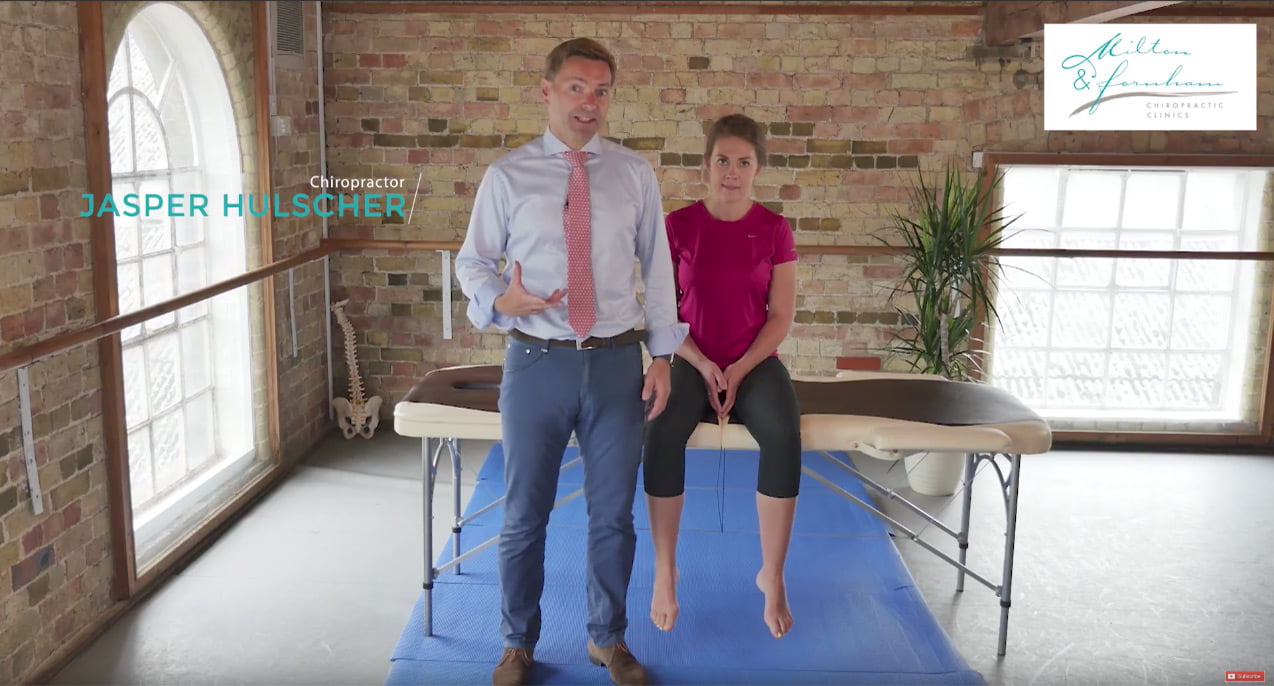
Hi, my name is Alex, I’m a chiropractor at Milton Chiropractic Clinic, and in this video I’m going to show you how to do a piriformis stretch.
The piriformis is a very important muscle. It runs deep within your backside — you have your big bum muscle, and it runs underneath that. When it goes tight it can cause some lower-back discomfort but also leg pain, sometimes quite a lot of leg pain. So it’s important to stretch it out to reduce the tension through there, which can help reduce the pain in your leg and lower back.
To show you how to stretch it, I’ll use Kathryn here, on the right side. Raise this leg up and bring it across the other leg, almost like you’re crossing your legs. Then the other leg comes up, and you pull backwards with your hands. You should feel a pulling sensation around your glutes or backside while doing this. Hold the stretch for around 20 seconds at a time, pulling nice and gently towards your chest. Let it relax a little, then go again for another 20 seconds.
It’s important to do this about three times a day to help reduce the tension through this muscle, which hopefully reduces some of your symptoms in your leg and lower back. I wish you the best of luck with this exercise. I’m Alex, thank you very much for watching.
Summary
The piriformis is a small but important muscle deep in the buttock, running beneath the large gluteal muscle. When it becomes tight it can cause local buttock and lower-back discomfort, and sometimes leg pain — because in around 20% of people the sciatic nerve passes straight through the muscle, meaning a tight piriformis can irritate the nerve and contribute to sciatica.
This video demonstrates the single most effective stretch to release it: lying down, crossing the affected leg over the other and gently drawing both towards the chest until you feel a pull around the glutes, held for about 20 seconds and repeated. Done around three times a day, it reduces tension through the muscle and can ease symptoms in the buttock, lower back, and leg.
For best results it’s combined with hip mobility work. Persistent buttock or leg pain that doesn’t respond should be professionally assessed.
Frequently Asked Questions
What is the piriformis muscle?
It’s a muscle that runs deep within the buttock, underneath the large gluteal (bum) muscle. It helps rotate and stabilise the hip. Because of where it sits, tightness in the piriformis can cause discomfort in the buttock and lower back, and sometimes pain down the leg.
How can a tight piriformis cause sciatica?
In roughly 20% of people, the sciatic nerve passes directly through the piriformis muscle rather than beneath it. In those people, when the piriformis tightens it can press on or irritate the sciatic nerve, producing sciatica-type leg pain. Releasing the muscle can relieve that irritation.
How do I do a piriformis stretch?
Lying down, raise the affected leg and cross it over the other, as if crossing your legs. Bring the other leg up and use your hands to gently pull both towards your chest. You should feel a pulling sensation around your glutes or backside. Keep the pull gentle and controlled.
How long should I hold it and how often?
Hold the stretch for around 20 seconds, let it relax, then repeat for another 20 seconds or so. Aim to do this about three times a day to steadily reduce the tension through the muscle.
Where should I feel the stretch?
Around the glutes or deep in the backside on the side you’re stretching. If you feel it there, you’re targeting the piriformis correctly. It shouldn’t be a sharp or painful pull — gentle and steady is the aim.
Related Videos



GET IN TOUCH
Let’s Talk
If you would like to find out how we can help you or any other questions, please message, call or use our form to get in touch.


Monday - Friday 7:30 - 19:30

Fornham Chiropractic Clinic
Unit 10
Fornham Business Court
The Drift
Fornham St Martin
Bury St Edmunds
IP31 1SL
