




3 of the Best Exercises for a Slipped Disc: Prone Prop, Prone Press-Up and Standing Back Bend
Three exercises that may help relieve back pain from a slipped disc — the prone prop, the prone press-up, and the standing back bend — demonstrated by a chiropractor with over 24 years of clinical experience.
A slipped (herniated) disc in the lower back is a common and often very painful problem, and it can also compress the sciatic nerve, causing pain that travels down the leg as well as in the back.
In this video, our chiropractor Jasper Hulscher demonstrates three extension-based exercises designed to help ease the pressure on a slipped disc. He covers the correct technique for each, the most common mistake patients make, how many repetitions to do, and — importantly — the warning signs that mean you should stop.
One key piece of guidance: don’t do these exercises first thing in the morning. Move around for an hour or two after getting up first, as the exercises can be too painful on a stiff spine. Some discomfort in the lower back is normal, but a shooting pain down the leg or a sharp pain in the back is a signal to ease off or stop.
Related Reading: Is chiropractic safe? What patients in Bury St Edmunds should know
Questions
What are the best exercises for a slipped disc?
How do I do the prone prop and prone press-up correctly?
Why shouldn't I do slipped disc exercises first thing in the morning?
What is the most common mistake people make with the prone press-up?
How many times a day should I do slipped disc exercises?
When should I stop doing back extension exercises?
Key Takeaways (timestamped)
[00:00] Timing matters — don’t do these first thing in the morning; walk around for 1.5–2 hours after getting up first, or they may be too painful.
[00:00] Exercise 1 — Prone prop — lie face down and prop up on your elbows to gently arch the back, encouraging the disc forward. Hold 30 seconds to a minute. If it’s too much, rest your fists under your chin instead.
[01:11] Exercise 2 — Prone press-up — hands under shoulders, push the upper body up while keeping the pelvis down; a dynamic up-and-down movement (up for two, down for two). About 15 repetitions, then a 30-second break.
[01:42] Common mistake — keeping the knees on the floor instead of the pelvis down, which loses the arch in the lower back. Keep the pelvis down.
[02:02] Exercise 3 — Standing back bend — hands in the small of the back, push the hips forward, hold, and return; a dynamic exercise you can do at work. A desk variation (palms turned out, leaning on a stable surface) works even better.
Warning signs: mild lower-back discomfort is normal; a shooting pain down the leg or sharp back pain means stop and ease down. If leg pain appears, the goal is for it to “centralise” back towards the lower back.
Frequency: aim for around five or six times a day, spread throughout the day.
Transcript
Exercise 1: Prone Prop
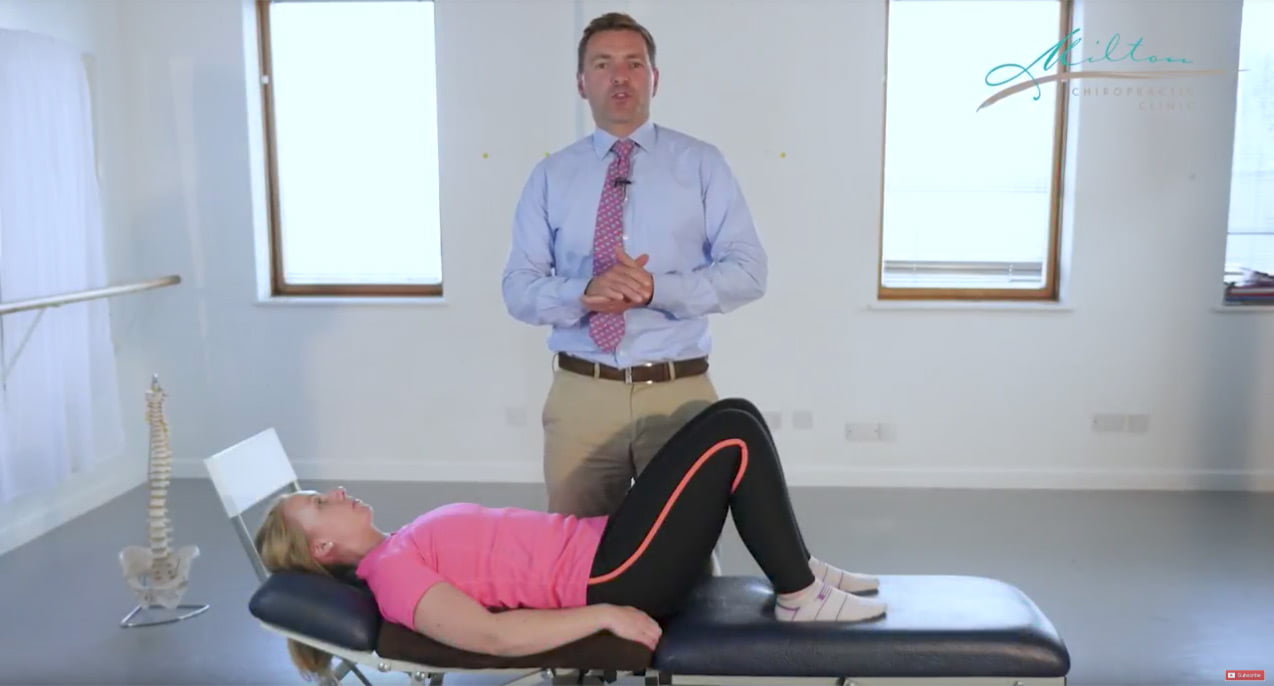
Hi, my name is Jasper, and today I’d like to show you one of the best exercises you can do for a herniated disc.
Before we start, you need to realise that you don’t want to do these exercises first thing in the morning — you want to get some movement into your spine first. So if you get up at seven o’clock, walk about for an hour and a half to two hours, until around nine, and then start. If you do this too early, it might be a bit too painful.
The first exercise is called the prone prop. It’s easy — prop yourself up on your elbows so you’re arching your back, which helps push the disc a bit more forward. Hold this position for about 30 seconds to a minute, then come down.
It’s perfectly normal to feel a bit of discomfort in your lower back — don’t worry about that. But as soon as you get a shooting pain down your leg, or a sharp pain in your back, you need to stop and come down a little. If that happens, put your fists underneath your chin and do the exercise from there instead. We’re using a bench here, but there’s no excuse — you can do this at home, on the floor, or on the bed, anywhere you like.
Exercise 2: Prone Press-Up
The next exercise is a continuation of the first, called the prone press-up. Place your hands underneath your shoulders and push yourself up, keeping the pelvis on the bench. This is a dynamic exercise, so you go up and down — come down, then count to two as you come up: one, two, and down, one, two. Do about 15 repetitions, then take a 30-second break.
There’s one mistake we often see with patients: instead of keeping the pelvis down, they keep their knees on the floor. That means you don’t get enough arch in the lower back. Keep the pelvis all the way down — that’s how you do the exercise properly.
Exercise 3: Standing Back Bend
The last exercise is called the standing back bend. It’s a variation of the other two that you can use at work, where you can’t lie on the floor and might not have a table. Place your hands in the small of your back and push forward. Like the others, it’s a dynamic exercise: push forward, hold it, and come back again. Do about 15 repetitions, then take a 30-second break — or do it while walking to the coffee machine or water cooler. It’s good to get some mobility into your lower back.
There’s a variant that’s even a bit better: using a desk or a stable chair, turn your palms away from you, lean on the desk, and arch your back — push forward, hold, and come back. Remember it’s dynamic, so do about 15 repetitions. As before, if you have pain in your leg, it should come back up towards your lower back. If it’s too painful, reduce the range — come back a bit, then go forward again.
Frequency
For all of these exercises, a good frequency is about five or six times a day, throughout the day. Good luck with them.
Summary
A slipped or herniated disc in the lower back is a common cause of back pain and can also press on the sciatic nerve, producing leg pain. This video demonstrates three extension-based exercises that may help ease the pressure: the prone prop, the prone press-up, and the standing back bend. Each gently arches the lower back to encourage the disc forward, and the standing version can be done at work.
Timing is important — the exercises are best done after moving around for an hour or two, not first thing in the morning on a stiff spine. Mild lower-back discomfort is expected, but shooting leg pain or sharp back pain is a signal to stop.
Done little and often, around five or six times a day, these exercises can form part of a self-care routine. If pain is severe, persistent, or radiating down the leg, a chiropractor can assess the underlying cause.
Frequently Asked Questions
Why shouldn't I do these exercises first thing in the morning?
The spine is stiffer after a night’s rest, and doing these extension exercises straight away can be too painful. It’s better to move around and let the spine loosen for an hour or two after getting up before starting.
What is the prone prop?
Lie face down and prop yourself up on your elbows, gently arching your lower back. This position helps encourage a slipped disc forward. Hold for 30 seconds to a minute, then come down. If propping on your elbows is too much, rest your fists under your chin and hold a gentler arch instead.
What is the most common mistake with the prone press-up?
Keeping the knees on the floor rather than the pelvis. When the knees stay down, you don’t get enough arch in the lower back and lose most of the benefit. The pelvis should stay down on the surface while you push the upper body up.
How many repetitions and how often should I do them?
Around 15 repetitions per set for the dynamic exercises (prone press-up and standing back bend), with a 30-second break between sets. Across the day, aim to do the exercises little and often — about five or six times daily.
What should I do if I feel pain down my leg during the exercises?
Ease off. A shooting pain down the leg or a sharp pain in the back is a signal to reduce the movement — come back a little and use a smaller range. The aim is for any leg pain to move back up towards the lower back (“centralise”) rather than travel further down. If it won’t settle, stop and seek professional assessment.
Can I do these exercises at work?
Yes — the standing back bend is designed for exactly that. Place your hands in the small of your back and push your hips forward, or use the desk variation with your palms turned out against a stable surface. It’s an easy way to get mobility into your lower back during the day.



GET IN TOUCH
Let’s Talk
If you would like to find out how we can help you or any other questions, please message, call or use our form to get in touch.


Monday - Friday 7:30 - 19:30

Fornham Chiropractic Clinic
Unit 10
Fornham Business Court
The Drift
Fornham St Martin
Bury St Edmunds
IP31 1SL
