



The Best Low Back Stretches: A Lower Back Pain Relief Routine
A four-exercise stretching routine that may help relieve lower back pain and stiffness, demonstrated by a chiropractor with over 24 years of clinical experience.
Most low back exercises you find online focus only on the lower back itself. But the lower back doesn’t work in isolation — it works together with the areas just above and below it. This routine is more effective because it loosens the whole back, not just the lower section.
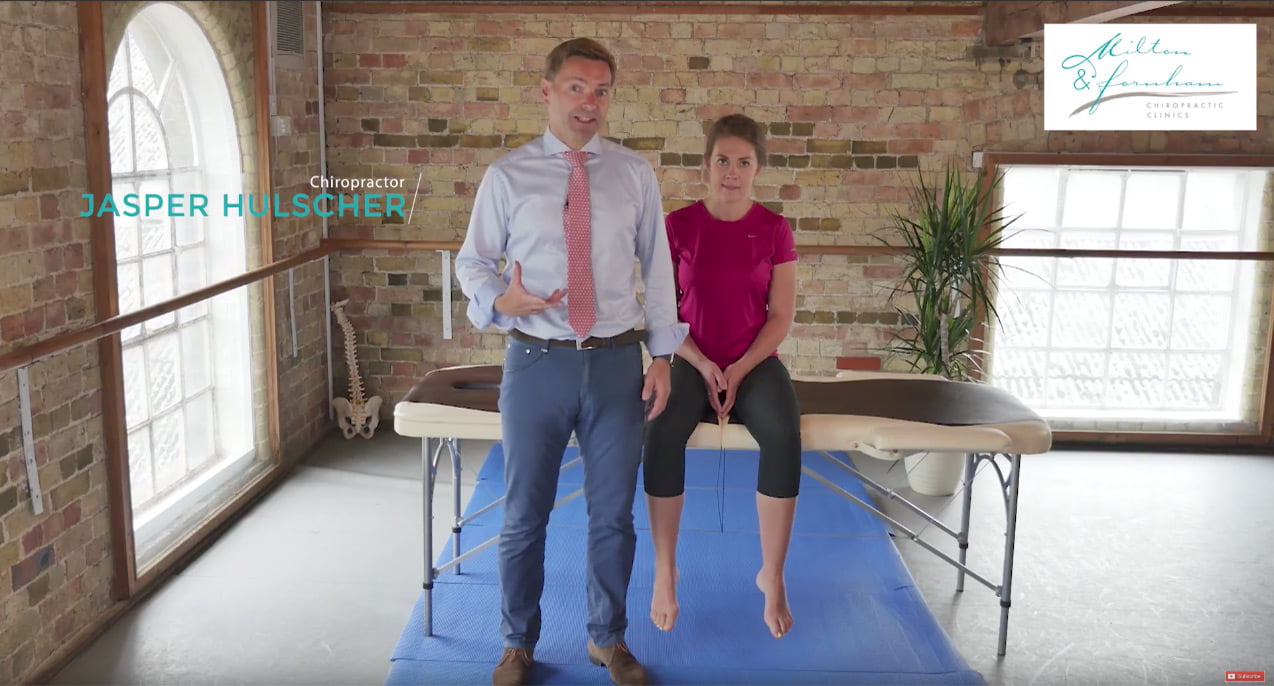
In this video, our chiropractor Jasper Hulscher demonstrates four exercises: the Brettzel 1.0 and 2.0 stretches (which mobilise the mid-spine, hips, hamstrings and lower back), the prone prop and prone press-up, and a protected version of the corkscrew stretch. He also explains an important principle that’s often overlooked: balance between the left and right sides matters more for preventing injury than flexibility alone, so both sides should be worked equally.
Throughout, the emphasis is on breathing into each stretch to relax and lengthen the muscles — and on the warning signs that mean you should ease off, particularly any pain radiating down the leg.
Related Reading: Is chiropractic safe? What patients in Bury St Edmunds should know
Questions
What are the best stretches for lower back pain?
What is the Brettzel stretch and how do I do it?
Why should back stretches work more than just the lower back?
How does breathing affect stretching?
Why does balance between left and right sides matter for back pain?
What should I do if a stretch causes pain down my leg?
Key Takeaways (timestamped)
[00:00] Why whole-back stretching works better — the lower back doesn’t work in isolation; loosening the areas above and below it makes lower-back stretches far more effective than isolating the lower back alone.
[01:00] Brettzel 1.0 — a side-lying stretch that mobilises the spine just above the lower back. Keep the neck supported and straight, bend the top leg past 90° (to about 100°) to protect the lower back, then add gentle contract-relax pushes and roll the shoulder back while breathing out. Hold ~10 seconds; do both sides equally.
[04:51] Balance before flexibility — research shows balance between the left and right sides prevents more injuries than flexibility alone, so make both sides equally supple before pushing range.
[05:19] Brettzel 2.0 — a kneeling rotation stretch for the lower back, hamstrings, TFL and side of the hips. Keep the supporting elbow straight, twist and lean while breathing into the stretch; an advanced version straightens the leg for more intensity.
[08:18] Prone prop — lie face down, pelvis tucked to the floor, prop on the elbows for ~30 seconds. Can be painful first thing in the morning — get some movement in first.
[09:00] Prone press-up — hands under shoulders, push up with the pelvis staying down; stop or reduce if pain radiates into the leg. A gentle pumping action helps build mobility.
[10:00] Protected corkscrew — a rotational lower-back stretch done with the hip bent to ~100° to protect the back, holding ~10 seconds each side and breathing out into it.
Throughout: breathe into every stretch — good breathing relaxes and lengthens the muscles.
Transcript
Introduction
So many low back exercises you find on YouTube focus purely on the lower back — things like bringing your knees to your chest or swinging your legs side to side. The problem is that the lower back doesn’t work in isolation; it works with the area above it and a bit lower down too. Exercises are far more effective if you also loosen those areas. That’s what I’ll do in this video: four exercises that loosen the whole back, not just the lower back, which relieves pain much more efficiently than only working the lower back. Let’s get started.
Brettzel Stretch 1.0
The first exercise is the Brettzel 1.0 — fantastic for mobilising the spine just above your lower back before you get into the lower back itself, which makes the lower-back stretches much more effective.
Keep a cushion and towel to hand, because your neck needs to stay straight — that influences the stretch. Lie on your side and bend the top leg past 90 degrees, to about 100; this protects the lower back so you can’t do more harm when it’s already sore. Hold that leg with your bottom hand, grabbing from underneath. Then bend the bottom leg and hold your ankle, ideally with the palm facing up.
First, pull your bottom leg back as far as you can. Once you have maximum slack, roll your shoulder back, and breathe into the exercise — the more relaxed you are and the better you breathe, the more mobility you get. Breathe in, exhale slowly, and hold the stretch about 10 seconds.
For more mobility, push your upper leg down without moving it while trying to straighten your lower knee without moving it — hold about five seconds, relax, breathe out, and roll the shoulder back a little more. Repeat.
One important point: research has shown that balance between left and right prevents more injuries than flexibility alone. So make sure both sides are equally supple before moving on to flexibility. Do the Brettzel on the other side too, the same way. Do these about five times before moving on.
Brettzel Stretch 2.0
The next exercise is the Brettzel 2.0 — good for the lower back, hamstrings, TFL and the side of your hips, so it really helps with back pain. Place your leg perpendicular in front of you, top leg behind with a 90-degree bend at the knee, hands about a foot in front. Move your right shoulder forward, twisting towards your left, and breathe into the stretch — hold about 10 seconds.
If that goes well, move to the second stage: place your right hand under your left, keeping your left elbow straight, and lean towards the right while rolling the left shoulder back. Keep the elbow straight and hold about 10 seconds, breathing out as you go to the side. Repeat on the other side. To make it more intense, straighten your leg in that position and lean to the side — that adds more stretch in the hip and lower back.
Prone Prop
This next one is very efficient for back pain — the prone prop. A word of caution: it can be painful first thing in the morning, so get some movement into your lower back first with a walk or a few simple stretches. Lie face down, pelvis firmly tucked to the floor, and support yourself on your elbows for about 30 seconds.
Prone Press-Up
If that goes well, move on to the prone press-up: hands under your shoulders, pelvis staying firmly down, push all the way up until your elbows are straight. Hold about 30 seconds, repeat 5 to 10 times. Important: you should not feel radiating pain into your leg. If you do, reduce the intensity — come down to where it’s fine and hold there. You can use a gentle pumping action to build mobility, or if it goes well, go all the way up and down. Do about 10 repetitions, three times, up to three times a day.
Corkscrew
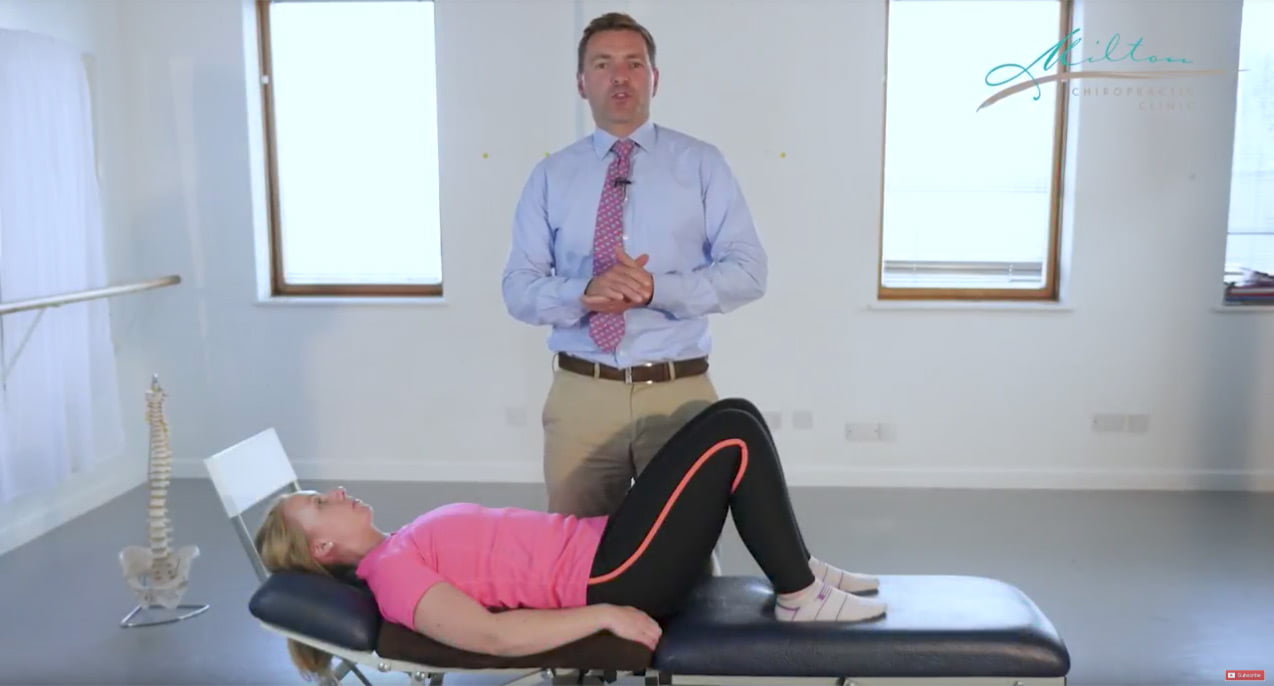
This next one is simple but powerful for the lower back, though it can aggravate it — so here’s a protected variant. Lie on your back, arms spread out. Raise your left leg to 90 degrees at the hip and knee, then drop it towards the right, grabbing the knee with your right hand and pushing gently down, keeping your left shoulder on the ground. Bend the hip a little more, to about 100 degrees, which protects the lower back while still stretching it. Hold about 10 seconds and repeat five times. Breathe out as you push the leg down — breathing out lets you relax and get more from the stretch.
Closing
I hope you found value in this video. If you did, leave a thumbs up, comment, or subscribe. Take care of yourself, take care of someone else if you can, and bye for now.
Summary
Most lower back exercises isolate the lower back alone, but it works together with the areas above and below it — so a routine that loosens the whole back tends to relieve pain more effectively. This video demonstrates four such exercises: the Brettzel 1.0 and 2.0 stretches, which mobilise the mid-spine, hips, hamstrings and lower back; the prone prop and prone press-up; and a protected version of the corkscrew stretch. Two principles run through it: breathe into each stretch, because good breathing relaxes and lengthens muscles, and work both sides equally, since research suggests left-right balance prevents injury more than flexibility alone. Several exercises include protective modifications — bending a leg past 90 degrees, keeping the pelvis tucked — to guard an already-sore lower back. The key warning sign to watch for is pain radiating down the leg, which means reduce the intensity. If lower back pain is severe or persistent, a chiropractor can assess the underlying cause.
Frequently Asked Questions
Why should low back stretches work more than just the lower back?
Because the lower back doesn’t work in isolation — it functions together with the mid-spine above it and the pelvis and hips below. Stretching only the lower back leaves those connected areas tight, which limits the benefit. Loosening the whole back makes the lower-back stretches themselves considerably more effective.
What is the Brettzel stretch?
The Brettzel is a side-lying stretch that mobilises the spine just above the lower back. You support your neck so it stays straight, bend your top leg past 90 degrees (to around 100, which protects the lower back), hold your legs as described, then roll the shoulder back and breathe out into the stretch. Adding gentle pushes — pressing the upper leg down and straightening the lower knee without actually moving them — increases the mobility gained. There’s also a Brettzel 2.0, a kneeling rotation that stretches the lower back, hamstrings and hips together.
Why does breathing matter when stretching?
Good breathing helps you relax, and the more relaxed you are, the more the muscles lengthen and the more mobility you gain. Breathing out as you move into each stretch lets you ease further into it safely, rather than tensing against it.
Why is balance between the left and right sides important?
Research indicates that balance between the two sides prevents more injuries than flexibility on its own. So before pushing for greater range, it’s worth making sure both sides are equally supple — working only your more flexible side can leave an imbalance that raises injury risk.
What should I do if a stretch causes pain down my leg?
Ease off. Pain radiating into the leg during the prone press-up (or any of these exercises) is a signal to reduce the intensity — come back to a smaller range where the leg pain settles, and use a gentle pumping movement instead of the full stretch. Radiating leg pain that won’t settle is worth having professionally assessed.
Can these exercises be done first thing in the morning?
The prone prop and press-up in particular can be painful first thing, when the spine is stiff. It’s better to move around and do a little gentle movement first, then come to these once the lower back has loosened up.


GET IN TOUCH
Let’s Talk
If you would like to find out how we can help you or any other questions, please message, call or use our form to get in touch.


Monday - Friday 7:30 - 19:30

Fornham Chiropractic Clinic
Unit 10
Fornham Business Court
The Drift
Fornham St Martin
Bury St Edmunds
IP31 1SL
