




The Best Shoulder Impingement Exercises: Tests, the Hanging Method, and Prevention
Effective exercises that may help relieve shoulder impingement and shoulder pain, demonstrated by a chiropractor with over 24 years of clinical experience. The video also includes two simple self-tests to check whether impingement is the cause, and two exercises to help prevent it returning.
A shoulder impingement happens when a tendon becomes entrapped in the subacromial space — the gap between the roof of the shoulder (the acromion) and the upper arm bone. Raising the arm narrows that space and traps the tendon, causing pain. The exercises shown work by increasing that space, reducing the pressure on the tendon.
Our chiropractor Jasper Hulscher first explains the basic anatomy, then runs two quick at-home tests to confirm the pain is impingement-related (so the exercises will actually help). The main exercise is a two-part hanging method based on the work of orthopaedic surgeon John Kirsch, whose book “Shoulder Pain?” reports a very high success rate for this approach. Finally, two resistance-band exercises target the muscles that pull the arm away from the roof of the shoulder, to help prevent impingement in future.
Two safety conditions before starting the hanging exercise: you should be able to raise your arm to 90 degrees relatively pain-free, and anyone with a history of shoulder dislocations or brittle bones should seek medical advice first.
Related Reading
Is chiropractic safe? What patients in Bury St Edmunds should know
Questions
What are the best exercises for shoulder impingement?
How do I know if my shoulder pain is an impingement? (two self-tests)
What is a shoulder impingement and what causes it?
How does the hanging exercise help shoulder impingement?
Which exercises help prevent shoulder impingement returning?
When should I NOT do these shoulder exercises?
Key Takeaways (timestamped)
[00:00] What the video covers — why impingement happens, what to do about it, and how to prevent it; plus two self-tests and a prevention routine.
[01:30] The anatomy — impingement is a tendon trapped in the subacromial space, between the acromion (roof of the shoulder) and the upper arm bone; raising the arm narrows the space. The exercises aim to increase it.
[02:42] Two self-tests — Test 1: arm forward to 90° and out ~30°, thumb down, resist downward pressure; pain suggests impingement. Test 2: arm out to 90°, elbow bent across the chest, rotate down and draw across; pain suggests impingement.
[04:31] The main (hanging) exercise — based on John Kirsch’s book “Shoulder Pain?” (reported ~98% success rate). Hang from a beam, palms facing away, partial hang for 10–30 seconds, rest ~1 minute, repeat, up to 10–15 minutes a day. Part two adds three light-weight movements (1–8 lb) once you can raise the arm above 90° pain-free.
[07:37] Infraspinatus exercise — resistance-band external rotation, elbow tucked to the side, upright posture; 10–15 reps, three sets daily.
[08:28] Teres major & latissimus dorsi exercise — resistance-band pull that strengthens the muscles depressing the arm away from the shoulder roof, increasing the space; 10–15 reps, three sets.
Before starting: be able to raise the arm to 90° relatively pain-free; seek medical advice first if you have a history of dislocations or brittle bones.
Transcript
Introduction
In this video I’ll demonstrate the most effective exercises for a shoulder impingement and shoulder pain. One of these has a very high reported success rate. To help you understand why you got the impingement and how to prevent it, I’ll answer three questions: why did you get it, what can you do about it, and how can you prevent it in future. I’ll cover a little basic anatomy, run two quick at-home tests to confirm it’s an impingement, show the main exercise, and finish with two exercises to prevent it returning.
Basic Anatomy of Shoulder Impingement
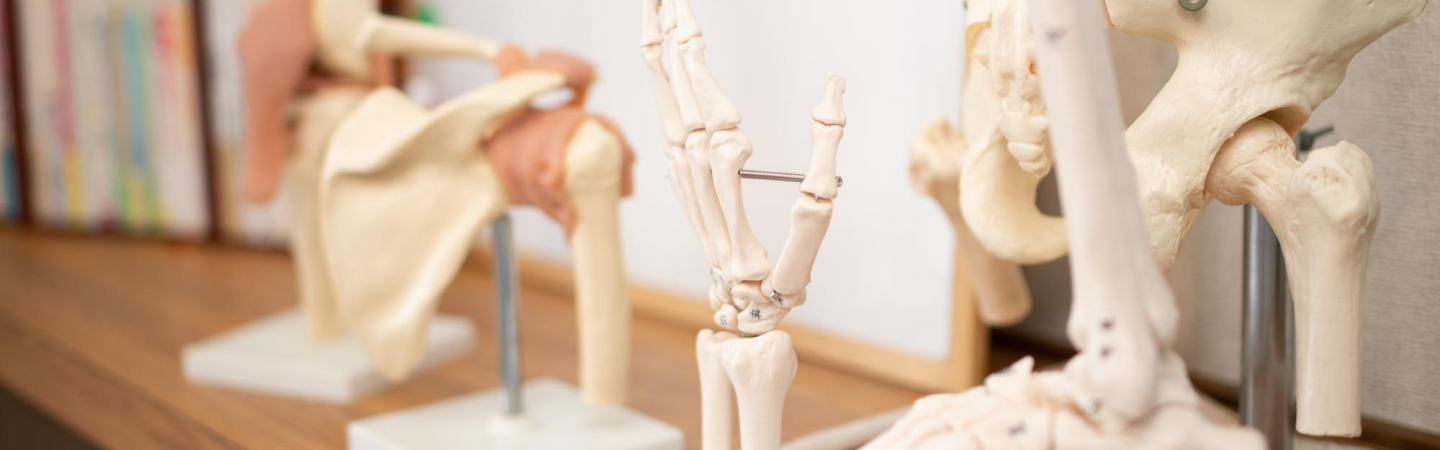
On an anatomical model of the right shoulder: the clavicle (collar bone) runs from the middle of the chest to the top of the shoulder; the acromion sits on top; and the upper arm sits below. An impingement is where the tendon becomes entrapped in the subacromial space — between the roof of the shoulder (the acromion) and the humerus. Raising the arm traps the tendon in that space, causing pain and impingement. The exercises increase the subacromial space, reducing the impingement: first by reducing inflammation, then by increasing the space through hanging, then with exercises to prevent it in future.
Impingement Tests
Two quick tests. First: raise the arm ahead of you to 90 degrees and out to about 30 degrees, thumb to the ceiling; then turn the thumb down and resist downward pressure from the other hand — pain in the shoulder suggests impingement. Second: raise the arm to the side to 90 degrees, bend the elbow and bring it across the chest; place your hand on the elbow, rotate the arm down, and draw it further across — pain suggests impingement. If so, these exercises will be beneficial.
The Main Exercise (Hanging)
The number one exercise is a two-parter: hanging plus specific movements. It’s based on the book “Shoulder Pain?” by John Kirsch, an orthopaedic surgeon in America, which reports a very high success rate. Two conditions before starting: you need to be able to raise your arm to 90 degrees relatively pain-free, and if you have a history of dislocating your shoulder or brittle bones, get medical advice first.
Find a beam to hang from, palms facing away. The goal is to hang loose; it may be sore initially. Do a partial hang for 10, 20, or 30 seconds, supporting yourself with your legs if needed. Rest about a minute, then repeat, for about 10–15 minutes a day. Once you can raise your arm above 90 degrees without pain, move on to part two.
Part two uses light weights (one to eight pounds), performed straight after hanging. Increase the weight only once you can do 30–45 repetitions pain-free. Three movements, all with palms facing down and full range of motion, staying upright (not slouched): raise to the side all the way up until the weights touch overhead and back down; raise to the front all the way up and down; and move the weights backward and forward. 30–45 repetitions each.
Infraspinatus Exercise
To prevent impingement, exercise the infraspinatus with a resistance band. Upright posture, thumb towards the ceiling, elbow touching your side at all times; rotate the arm outward. 10–15 repetitions, three sets, once a day.
Teres Major and Latissimus Dorsi Exercise
This targets the teres major and latissimus dorsi, which pull the upper arm away from the roof of the shoulder, increasing the space. With a resistance band, palm and thumb turned as described, elbow straight, pull the band from the front to behind you, staying upright. 10–15 repetitions, three sets.
Closing
I hope you found value in this video. Check out our other videos too, especially the ones on posture, which may be beneficial. Good luck, and bye for now.
Summary
A shoulder impingement occurs when a tendon becomes trapped in the subacromial space — the gap between the acromion (the roof of the shoulder) and the upper arm bone — which narrows when the arm is raised, causing pain. This video takes an education-first approach: it explains the anatomy, then offers two quick self-tests to confirm the pain is impingement-related so the exercises will be worthwhile. The central exercise is a two-part hanging method drawn from orthopaedic surgeon John Kirsch’s book “Shoulder Pain?”, which reports a very high success rate; it works by opening up the subacromial space, and progresses to light-weight movements once the arm can be raised above 90 degrees without pain. Two resistance-band exercises then strengthen the infraspinatus, teres major, and latissimus dorsi — muscles that pull the arm away from the roof of the shoulder — to help prevent impingement returning. Two safety conditions apply before the hanging exercise: being able to raise the arm to 90 degrees relatively pain-free, and seeking medical advice first if there’s a history of dislocations or brittle bones. Persistent shoulder pain should be professionally assessed.
Frequently Asked Questions
How do I know if my shoulder pain is an impingement?
Two quick self-tests can indicate it. First: raise the arm in front to 90 degrees and out to about 30 degrees with the thumb pointing down, then resist downward pressure from your other hand — pain in the shoulder suggests impingement. Second: raise the arm out to 90 degrees, bend the elbow and bring it across your chest, then rotate the arm down and draw it further across — again, pain suggests impingement. If either reproduces your shoulder pain, the exercises are likely to help. (These are indicators, not a diagnosis — a professional assessment confirms it.)
What is a shoulder impingement?
It’s when a tendon becomes entrapped in the subacromial space — the gap between the acromion (the bony roof of the shoulder) and the head of the upper arm bone. Lifting the arm narrows this space and pinches the tendon, causing pain. The goal of the exercises is to increase that space so the tendon isn’t trapped.
How does the hanging exercise help?
Hanging from a beam gently opens up the subacromial space, taking pressure off the trapped tendon. The approach is based on the work of orthopaedic surgeon John Kirsch, whose book “Shoulder Pain?” reports a high success rate for it. You start with a supported partial hang for 10–30 seconds, rest, and repeat, building up to around 10–15 minutes across a day; once you can raise the arm above 90 degrees pain-free, you add light-weight movements.
Which exercises help prevent shoulder impingement coming back?
Two resistance-band exercises that strengthen the muscles which pull the upper arm away from the roof of the shoulder — the infraspinatus (external rotation with the elbow tucked in) and the teres major and latissimus dorsi (a band pull from front to back). By strengthening these, you help keep the subacromial space open, reducing the chance of the tendon being impinged again.
When should I not do these shoulder exercises?
Two cautions. You should be able to raise your arm to about 90 degrees relatively pain-free before starting the hanging exercise. And if you have a history of shoulder dislocations or very brittle bones, get medical advice before beginning. Good upright posture matters throughout — doing the exercises slouched can make things worse.
Does posture affect shoulder impingement?
Yes — the exercises are meant to be done with an upright posture, and doing them slouched can worsen the problem. Posture work more generally is worth combining with these exercises, since it affects the position of the shoulder and the space the tendon runs through.
Related Videos



GET IN TOUCH
Let’s Talk
If you would like to find out how we can help you or any other questions, please message, call or use our form to get in touch.


Monday - Friday 7:30 - 19:30

Fornham Chiropractic Clinic
Unit 10
Fornham Business Court
The Drift
Fornham St Martin
Bury St Edmunds
IP31 1SL
